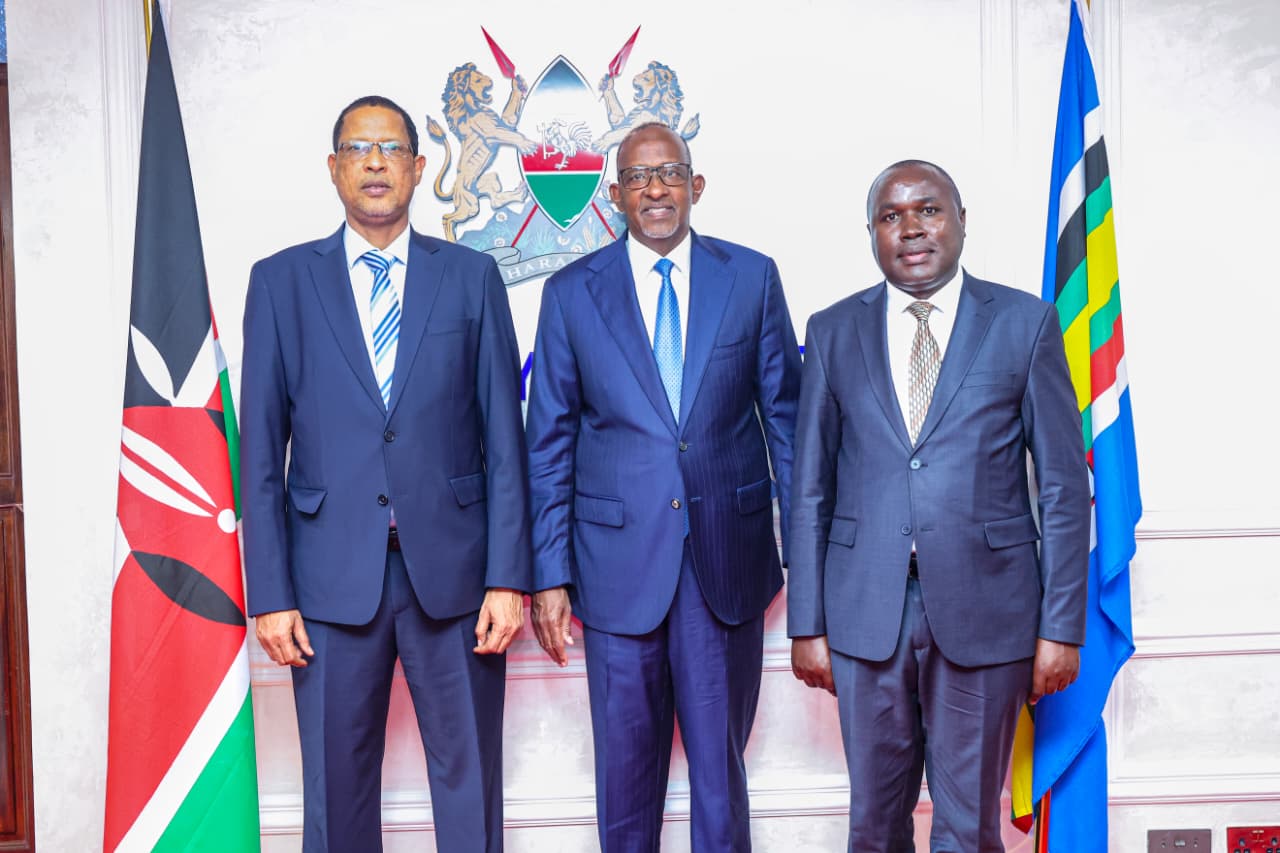
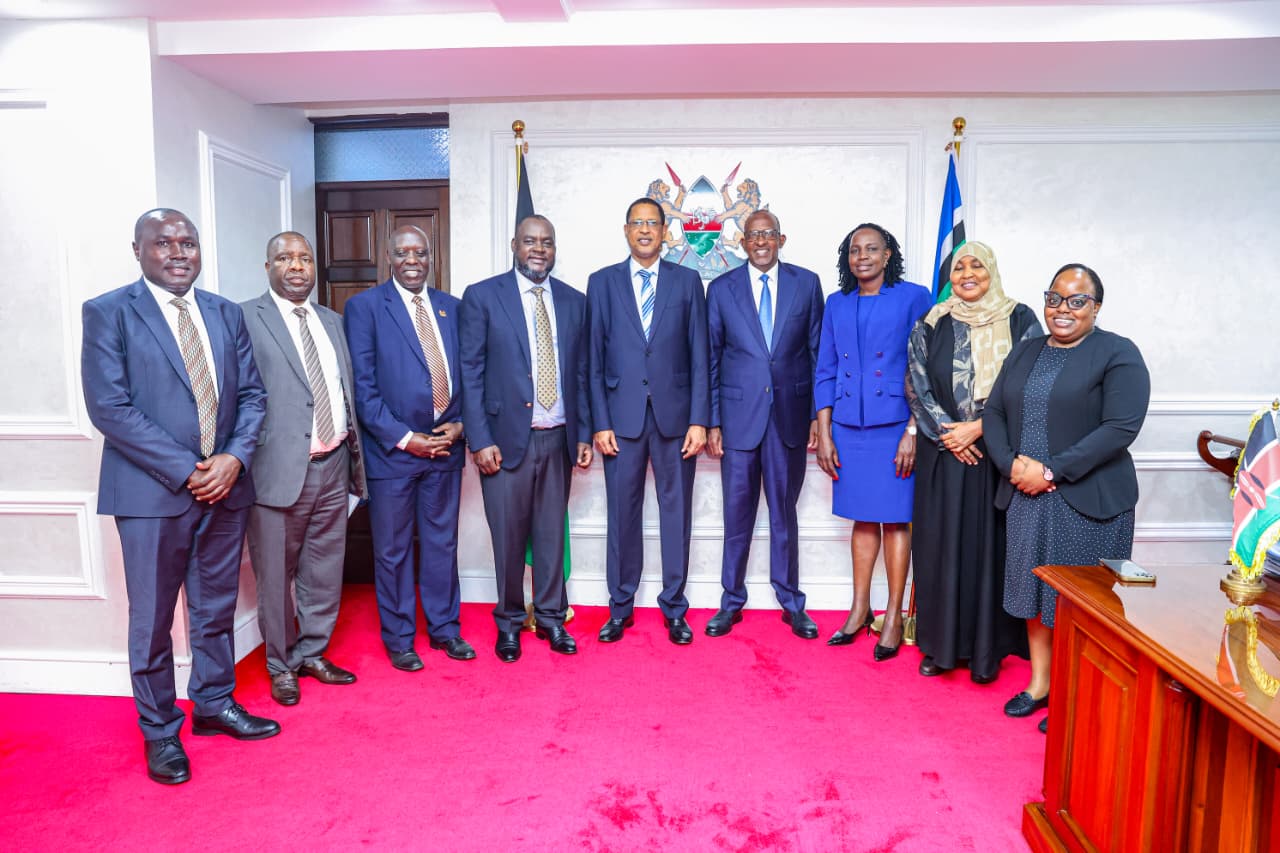
Health Cabinet Secretary, Hon. Aden Duale, EGH, Hosts NSDCC Board to Accelerate Progress Towards Ending HIV and Syndemic Diseases
The Cabinet Secretary for Health, Hon. Aden Duale, EGH, hosted [...]

The Cabinet Secretary for Health, Hon. Aden Duale, EGH, hosted [...]
The National Syndemic Diseases Control Council (NSDCC) is a State Corporation established under Section 3 of the State Corporations Act, Cap 446, through the National AIDS Control Council Order, 1999 as amended by legal notice number 143 of 2022. The Council is mandated to manage the following syndemic diseases; HIV, sexually transmitted infections, malaria, leprosy, tuberculosis and lung disease.
First Lady H.E. Rachel Ruto has led national and development partners in signing a Call to Action to End the Triple Threat of new HIV infections, adolescent pregnancy and sexual and gender-based violence (SGBV) among young people.
The commitment was made during a high-level roundtable convened by the National Syndemic Disease Control Council (NSDCC), bringing together government, county leadership, Parliament, development partners and young people.
The First Lady signed the commitment plan alongside national and county leaders and development partners. The signing was witnessed by Principal Secretary Mothoni, Ministry of Health representatives, UNAIDS Kenya Country Director Dr Richard Amenyah, governors and senators, among other stakeholders.
The plan seeks to translate evidence and young people's lived experiences into clear, measurable and time-bound action to strengthen prevention, protection and access to adolescent-friendly services.
The urgency of the challenge was underscored by Farida, a young survivor from Dandora, who shared her experience of facing all three threats, including becoming pregnant at the age of 15.
Principal Secretary Mothoni Njuki said Farida’s experience reflected the realities behind the statistics and called for collective action.
“The triple threat of adolescent pregnancy, new HIV infections and sexual and gender-based violence is not a collection of distant statistics. It is the lived reality of our daughters, sons and communities. These interconnected threats put an entire generation at risk, its potential, education and dignity. This is a call to action for all of us.”
The First Lady said Kenya must now move from listening to young people to implementing solutions that respond to their realities.
“We have listened to the voices and lived experiences of our young people. The time has now come to turn those voices into action.”
Data presented at the meeting showed that young people aged 10 to 34 account for 72 per cent of new adult HIV infections, while women and girls account for about 65 per cent of new infections. In 2025, 236,000 adolescents aged 10 to 19 presented at health facilities with pregnancies, while children aged 10 to 17 accounted for 38 per cent of reported SGBV cases.
NSDCC CEO Douglas O. Bosire said the interconnected challenges require coordinated action across sectors, bringing together government, communities, partners and young people.
The roundtable reaffirmed the need for a whole-of-society approach, with stakeholders committing to strengthen prevention, protection and adolescent-friendly services to safeguard the health, safety and future of Kenya’s young people.
HOMA BAY, August 2026 — First Lady of the Republic of Kenya, Her Excellency Mrs. Rachel Ruto, has called for stronger community action to protect adolescents and young people from new HIV infections, adolescent pregnancies and sexual and gender-based violence (SGBV), collectively known as the Triple Threat.
The First Lady made the call at Mawego National Polytechnic in Homa Bay County, where she joined the National Syndemic Diseases Control Council (NSDCC) through the Ministry of Health, the Homa Bay County Government, government agencies, development partners and thousands of community members for a high-level community dialogue on the Triple Threat.
The engagement brought together stakeholders around a common message: protecting Kenya’s young people requires coordinated action that tackles the interconnected factors driving vulnerability to HIV, adolescent pregnancy and SGBV.
The urgency is underscored by Homa Bay’s latest data. The county has an HIV prevalence of 11.74 per cent, with adolescents aged 10–19 accounting for 205 of the 997 new HIV infections, representing 20.6 per cent of all new infections. The figures are based on the 2026 estimates presented during the Triple Threat meeting.
Adolescent pregnancy remains another critical concern. In 2025, the county recorded 7,582 adolescent pregnancies among girls aged 10–19, including 366 among girls aged 10–14 and 7,216 among those aged 15–19.
The county also reported 379 SGBV cases among adolescents aged 10–17 in 2025. Of these, 147 eligible survivors were initiated on post-exposure prophylaxis (PEP), while 117 were eligible for emergency contraception.
Against this backdrop, NSDCC Chief Executive Officer Douglas Bosire said Kenya must intensify prevention efforts to ensure that progress made in the HIV response is not undermined by continued new infections among young people.
“We have made significant progress in the HIV response, but the continued vulnerability of adolescents and young people demands renewed and coordinated action. We cannot address HIV, adolescent pregnancies and SGBV in isolation because these challenges are interconnected,” said the CEO.
He called for stronger collaboration among national and county governments, communities, parents, schools, health providers, development partners and young people to address the drivers of the Triple Threat.
“Our young people need accurate information, access to youth-friendly health services, protection from violence and the opportunity to make informed decisions about their health and future. Ending the Triple Threat is a shared responsibility,” he said.
The First Lady was accompanied by Principal Secretary for Medical Services, Dr. Ouma Oluga and H.E. Gladys Wanga, EGH Governor, Homa Bay County. Her participation in the dialogue was part of the Organization of African First Ladies for Development (OAFLAD)’s advocacy efforts to advance the health and well-being of women, children and young people.
The dialogue reinforced the need for communities to move from awareness to action by strengthening prevention, early intervention, access to comprehensive health information and services, protection from SGBV and support for adolescents and young people.
NSDCC is calling on all stakeholders to renew their commitment to ending the Triple Threat and creating an environment where every young person can access the information, services and protection they need to make healthy choices and realise their full potential.
Kenya’s Health Sector reforms have created new opportunities to strengthen the prevention, early detection and management of HIV and other syndemic diseases by bringing services closer to communities and strengthening county health systems.
Speaking at the Kenya Health Summit 2026, President William Ruto highlighted the shift towards prevention, early detection, treatment and efficient referral, supported by Community Health Promoters reaching households across the country.
The reforms have provided an important platform for integrating HIV and syndemic disease services into primary healthcare, improving access to prevention information, testing, treatment and referral while reducing financial and geographical barriers.
Cabinet Secretary for Health Aden Duale emphasised the critical role of counties in delivering UHC, noting that health reforms depend on collaboration between the National and County Governments. Investments in medicines, diagnostic equipment and health workers are strengthening services across counties. NSDCC leveraged the Summits insights and lessons for a coordinated, integrated and people-centred response to HIV and other syndemic diseases.
The National Syndemic Diseases Control Council (NSDCC) in partnership with the Office of the Kisii County Woman Representative, Hon. Donya Dorice Aburi, the County Government of Kisii, community leaders and other elected leaders, has stepped up public education and sensitization on the Triple Threat of new HIV infections, unintended pregnancies and sexual and gender-based violence in Kisii County.
Through the Council's coordination and partnership with other state agencies, 1,000 dignity packs for women, 1,400 bars of soap and 920 plastic troughs were distributed today at St. Anne’s Nyang’oke in Bonchari. The outreach also provided an opportunity to engage the community directly on HIV prevention and the Triple Threat, reaching an estimated 5,000 people with key health and prevention messages.
As the national body mandated to coordinate Kenya’s multisectoral response to HIV and other syndemic diseases, NSDCC continues to work with national and county governments, communities and other partners to strengthen prevention, promote access to health information and services, and encourage communities to make informed choices about their health and well-being.
The National Syndemic Diseases Control Council (NSDCC) in collaboration with the Office of the Chief of Staff and Head of the Public Service, the County Government of Busia and other partners, under the overall coordination of the Ministry of Health supported a free medical camp at Lugulu A.C. Secondary School in Butula Sub-County, Busia County today.
Community members accessed a wide range of free health services, including HIV and TB screening, blood pressure checks, cancer screening, STI screening and treatment, mental wellness services, dental screening, health education, medical consultations and wellness check-ups, treatment for common illnesses, as well as Social Health Authority (SHA) services.
As part of the outreach, NSDCC conducted public education through peer-to-peer engagement to increase awareness and understanding of HIV and other syndemic diseases including their prevention and available services. The Council also shared prevention and health information on the Triple Threat of new HIV infections, adolescent pregnancies, and sexual and gender-based violence affecting adolescents and young people, empowering communities to make informed choices and take action to protect their health and well-being.
Maktaba Kuu Building, 2nd Floor,
Ngong Road, Upperhill
P.O. Box 61307 – 00200
Nairobi, Kenya
Phone: +254727531250, +254727531251,+254733886388,+254733886288
Email: communication@nsdcc.go.ke
Mon to Fri – 8:00 am to 5:00 pm
© Copyright 2026 | National AIDS Control Council | All Rights Reserved